A light dusting of moss on a sound roof is mostly cosmetic, but thick moss is worth removing, because it holds water against the roof, grows into the gaps between tiles and washes down to block gutters and downpipes. It should be removed carefully, usually by scraping and brushing by hand and then applying a treatment to slow regrowth, because heavy-handed cleaning can damage tiles. As it means working on the roof, moss removal is a job for a professional.
Why moss grows on some roofs and not others
Moss needs moisture and shade, so it thrives on roofs that stay damp for long spells. You will usually find the most of it on:
- North facing roof slopes, which get little direct sun.
- Roofs shaded by trees, which are common on the tree lined streets of Tunbridge Wells and in the wooded countryside of the Weald.
- Concrete tiles and other rough surfaced tiles, which give moss a better grip than smoother materials.
- Older roofs, where years of weather have roughened the surface of the tiles.
Moss grows mainly in the cooler, wetter months. In a dry summer it can turn brown and look almost dead, then green up again in autumn, so a roof often looks at its worst in winter and spring.
Is moss on a roof actually a problem?
Not always. A thin covering on a roof in good condition is mainly about appearance. It becomes a problem as it thickens:
- It holds water like a sponge and keeps the tiles wet for long periods, which is not good for them in freezing weather.
- It grows into the gaps and overlaps between tiles, holding water where the roof is designed to shed it.
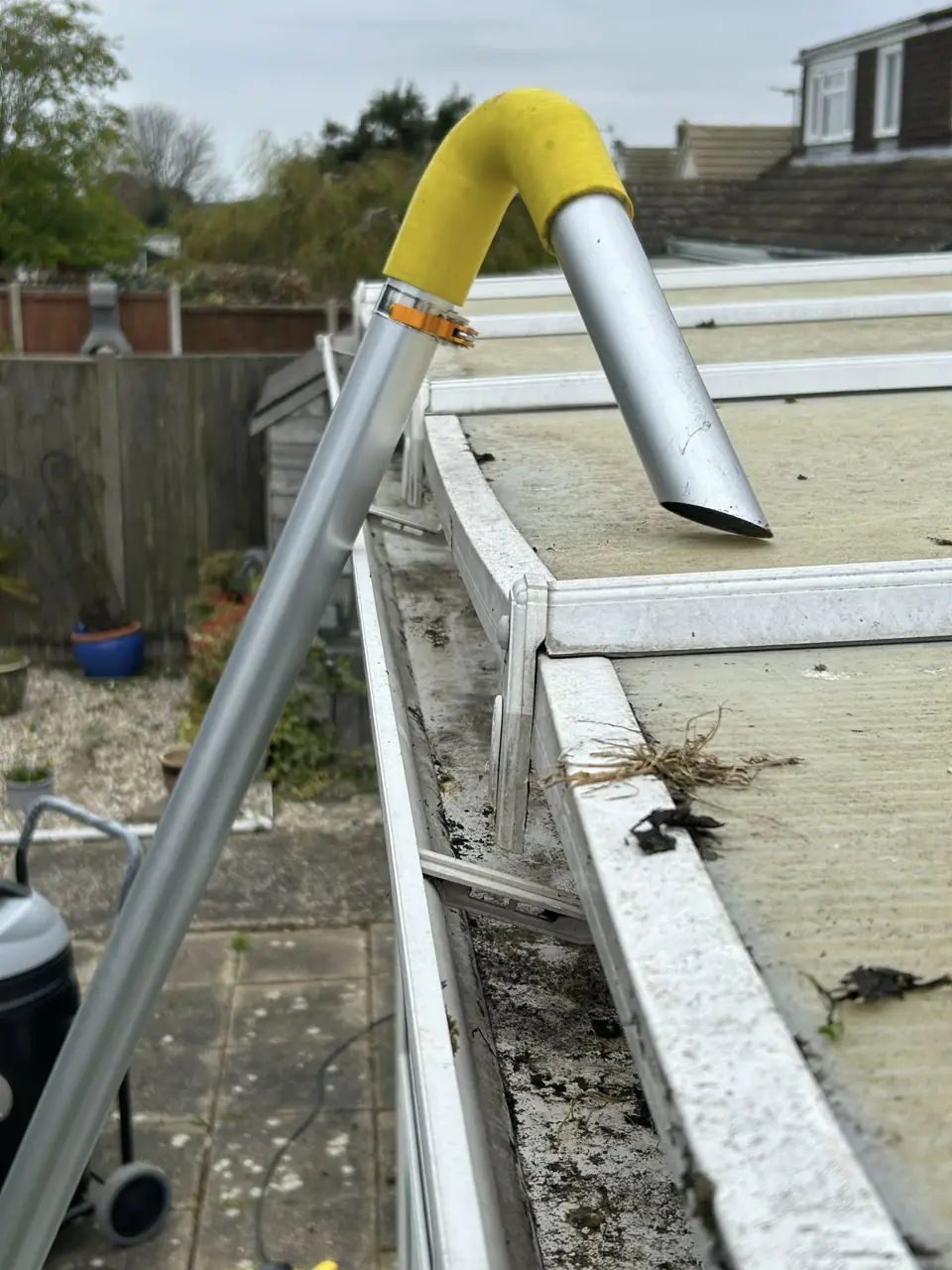
- Clumps break off, wash into the gutters and block the outlets and downpipes, which leads to overflowing gutters and damp walls. There is more on that in How often should gutters be cleaned?
- It hides problems such as cracked or slipped tiles that would otherwise be easy to spot.
So a little moss is nothing to panic about, but a thick, spreading layer is worth dealing with before it causes problems elsewhere.
Moss, lichen and algae are not the same
It helps to know what you are looking at, because each is dealt with differently.
- Moss is green, soft and cushion-like, growing in clumps and along the edges of tiles.
- Lichen forms flat, crusty patches in shades of grey, yellow or orange. It grows very slowly and grips the surface tightly.
- Algae shows as dark green or black streaks, often running down the slope of the roof.
Lichen in particular should not be scraped off hard, as it can take the surface of the tile with it. It is usually treated and left to break down over time.
How moss is removed well
Good practice for a mossy roof generally looks like this:
- A look over the roof first, to spot broken, cracked or slipped tiles before any work starts.
- Removing the moss by hand, scraping and brushing it off the tiles carefully so they are not lifted or cracked.
- Clearing all the moss that falls into the gutters, and checking that the downpipes run freely.
- Applying a treatment to kill what is left and slow regrowth. Treatments usually work gradually, so the roof keeps improving for some time afterwards.
- Reporting any repairs that are needed, ideally with photos.
High pressure water needs great care on a roof. Too much pressure can wear away the surface of concrete tiles, crack older tiles and slates, force water up under the tiles and wash out the mortar along the ridge. Whoever you ask to clean your roof, ask how they will remove the moss and how they will avoid that kind of damage.
Why it is not a DIY job
Working on a roof, or from a ladder at roof height, is dangerous, and walking on tiles can crack them. Moss removal is a job for a professional with the right access equipment.
Some older garage and outbuilding roofs are made from asbestos cement sheets, which are fragile as well as hazardous. Never climb on, scrape, brush or pressure wash them, and have them checked by a professional first.
What you can safely do is watch for the warning signs from the ground or an upstairs window: clumps of moss on the path or lawn, gutters overflowing in heavy rain, or tiles that look out of line. A pair of binoculars helps.
Moss removal and roof repairs go together
Clearing moss often reveals small faults that were hidden underneath, such as cracked or slipped tiles, gaps along the ridge or worn mortar. These are best put right promptly, before the next spell of wet weather finds them, so it makes sense to deal with roof cleaning and any repairs at the same time.
Questions to ask any roof cleaner
- How will you remove the moss, and will any pressure washing be involved?
- How will you work safely at height?
- Will you clear the gutters and check the downpipes afterwards?
- What treatment will you use, and is it safe around plants, pets and ponds? Should I disconnect my water butts while it works?
- Will you show me any damage you find, with photos?
Getting a quote in Kent
Meridian Maintenance offers roof cleaning and moss removal, roof and gutter repairs, and gutter cleaning for homes across Kent. It is a small, family run business based in Tunbridge Wells, run by Charlie, with ten years of experience in the trade.
Quotations are free and there is no deposit to pay. Find out more about roof cleaning and repairs, get in touch, or call Charlie on 07742 413224.