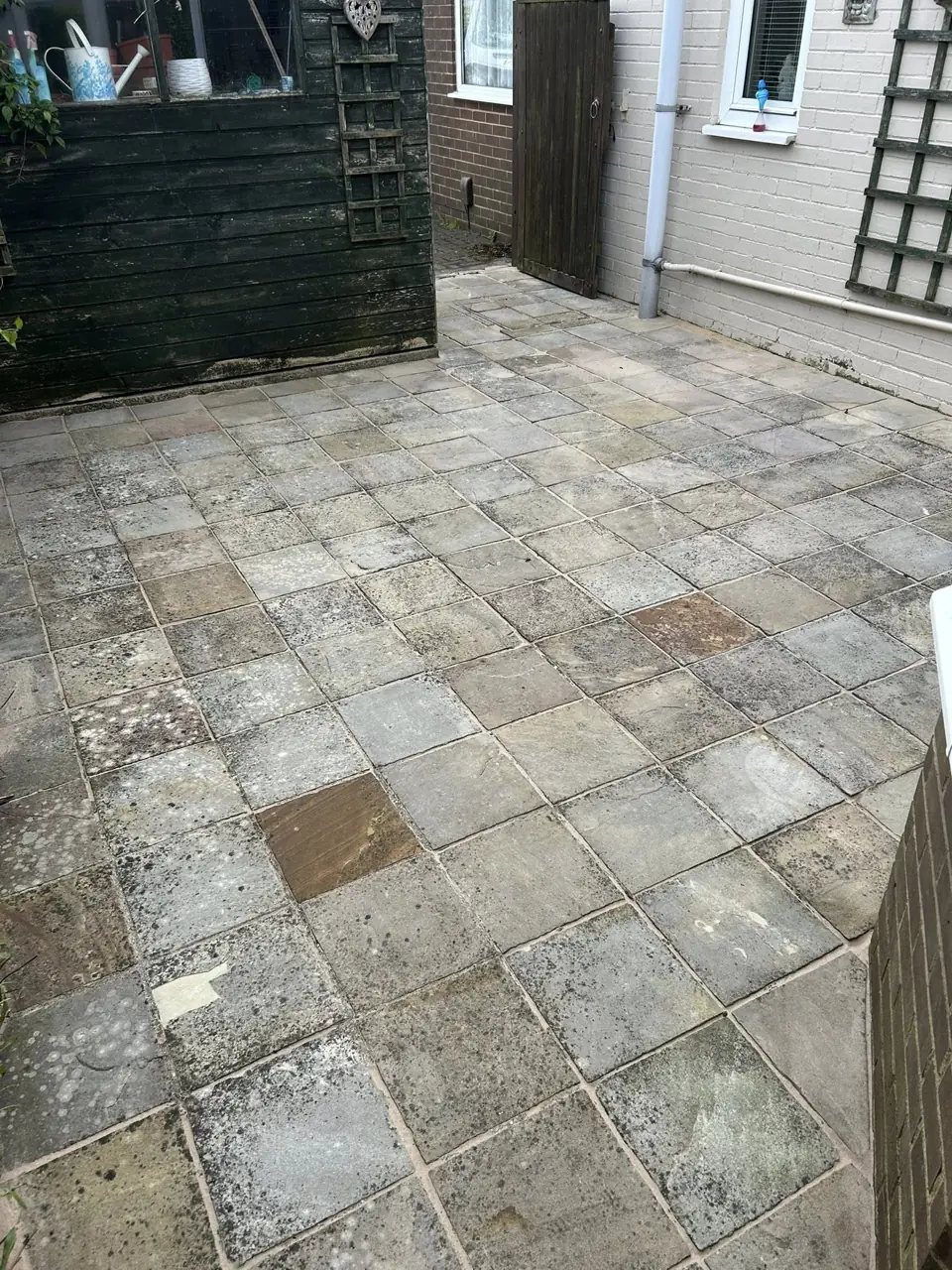
Re-sanding means brushing fresh, dry sand into the joints between the blocks once the paving has been cleaned, and sealing means applying a protective sealer over the surface that helps hold that sand in place and keeps the paving cleaner for longer. It is worth doing after a deep clean has washed the old sand out, when weeds keep coming back in the joints, or when you want freshly cleaned paving to stay looking good. It will not fix sunken, rocking or broken blocks, which need putting right first.
Why the sand between the blocks matters
Block paving is usually laid on a bed of sand over a firm, compacted base, with fine sand brushed into the narrow joints between the blocks. That jointing sand does more than fill the gaps. It locks the blocks against each other so the surface works as one, spreading the weight of cars and feet instead of letting individual blocks shift.
When the sand goes, blocks can start to move, edges can chip, and the empty joints make an ideal home for weeds and moss. Sand is lost in several ways:
- Pressure washing, which flushes sand out of the joints along with the dirt.
- Heavy rain, especially on sloping drives where water runs across the surface.
- Weeds and moss, whose roots loosen the joints.
- Ants, which carry sand out as they dig their nests.
What re-sanding involves
Re-sanding is simple in principle, but the result depends on doing things in the right order and in the right conditions. Good practice generally looks like this:
- The paving is cleaned first, so moss, weeds and old dirty sand come out of the joints.
- The surface is left until it is completely dry.
- Kiln dried sand, which is fine and bone dry, is brushed across the surface in different directions until the joints are full.
- The loose sand left on top is swept off.
- The joints are checked again once the sand has had time to settle, and topped up where needed.
Dryness matters more than anything. Dry sand runs down into narrow joints, while on a damp surface it clumps and sticks to the top of the blocks instead. Sand in unsealed joints also settles over the following weeks, so topping it up later is normal rather than a sign of a poor job.
What sealing involves
A block paving sealer is a liquid applied over the whole surface once it is clean, dry and freshly sanded. It soaks into the blocks and into the sand in the joints. Many sealers are designed to bind the top of the jointing sand, which makes it much harder for rain or a brush to wash it out and gives weeds less of a foothold.
Sealers come in different finishes. Some leave the paving looking much as it did, with a natural matt finish, while others deepen the colour or add a sheen, often called a wet look. It is worth seeing an example before you choose, because a glossy finish suits some homes better than others.
The weather matters as much as the product. Sealer needs to go onto paving that is thoroughly dry, in dry, mild conditions, and it needs time to cure before rain falls on it or anyone walks or drives over it. Sealing over damp paving can trap moisture and leave a cloudy or patchy finish. That is why sealing is usually planned for the drier months, and why it is better to move the date than to seal in the wrong weather.
A note on new paving
If your paving is new, you may see a white, chalky bloom on the surface in the first months. This is efflorescence, natural salts coming out of new concrete blocks, and it usually fades on its own with time and weather. It is generally best to let it clear before sealing, rather than locking it in.
When it is worth doing
- After a deep clean. Pressure washing removes jointing sand, so re-sanding afterwards is part of the job rather than an optional extra.
- When weeds and moss keep returning in the joints, however often you pull them out.
- When the paving looks faded and you would like to bring back some of its colour.
- When you want a clean drive to stay that way for longer. Sealed paving is easier to sweep, and spills are easier to deal with before they soak in.
Re-sanding is worthwhile whenever the joints are empty. Sealing is more of a choice: it needs redoing from time to time, but it helps paving stay cleaner and keeps the sand where it belongs. If you would rather have it done for you, see block paving re-sanding and sealing.
When it will not help
Re-sanding and sealing look after paving that is basically sound. They will not fix:
- Dips, ruts or sunken areas, which point to a problem with the base underneath.
- Blocks that rock when you stand on them.
- Cracked or broken blocks.
- Puddles that form in the same place after every shower, which suggest a drainage or levels problem.
Those areas need lifting and relaying first. Sealing over them simply locks the problem in.
Can you do it yourself?
Re-sanding a small patio or path is a manageable job if the paving is clean and properly dry. Brush the sand in, sweep off the excess and top up the joints after the first few showers.
Sealing is less forgiving. The paving has to be thoroughly clean, completely dry and fully sanded, the weather has to stay dry while the sealer cures, and it has to go on evenly. A patchy or cloudy result can be hard to put right. If you do it yourself, follow the manufacturer’s instructions closely, including the advice on ventilation, gloves and keeping children and pets off the surface.
Questions to ask before you book
- Will the paving be cleaned first, and is that part of the same job?
- What sand will go in the joints, and will they be checked and topped up?
- Which sealer and which finish would suit my paving, and will it affect the grip on a slope or steps?
- How long should the paving be kept clear of feet and cars afterwards?
- What happens if rain is forecast on the day?
- How should I clean the sealed surface, and when is it likely to need resealing?
Getting a quote in Kent
Meridian Maintenance is a family run business based in Tunbridge Wells, covering Kent, and block paving re-sanding and sealing is one of its services, alongside driveway and patio pressure washing. If your paving needs a clean first, Pressure washing a driveway or patio: what to expect explains that stage.
Quotations are free and there is no deposit to pay. Find out more about block paving re-sanding and sealing, contact Meridian for a free quote, or call Charlie on 07742 413224.